Introduction to Multi-Location SEO
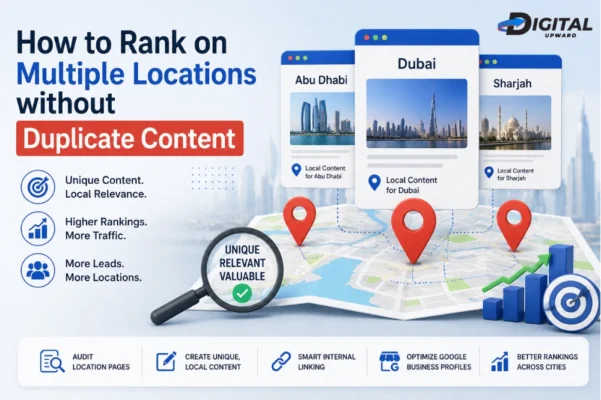
The best way to grow a business is by opening new locations and establishing an online presence that allows you to get leads locally. The issue with growing a business across numerous cities is many companies rely on duplicate location pages. In the past, simply changing the city name on various pages was a reliable way to receive decent rankings on Google. However, Google has advanced significantly in recent years, and now rankings are based on factors such as unique content, local relevancy, user intent and overall value of the content provided to the consumer. As a result of these changes to Google’s algorithms, businesses that operate across the UAE must develop smarter local SEO strategies that help them rank in cities such as Dubai, Abu Dhabi, Sharjah, Ajman and others without having to create duplicated location pages.
In today’s local SEO landscape, competition is very high, especially in places like Dubai where there are thousands of businesses from nearly every industry who are spending a significant amount of money on digital marketing. When searching for products or services that they need, users frequently include local intent in their queries by entering search terms such as “the best agency in Dubai”, “near me services” or “SEO company in Abu Dhabi”. Because of this, it is common for businesses to utilize the skills of local SEO experts in Dubai to create structured local SEO campaigns to increase visibility in multiple markets, while still delivering high quality content.
Understanding Duplicate Content in Local SEO
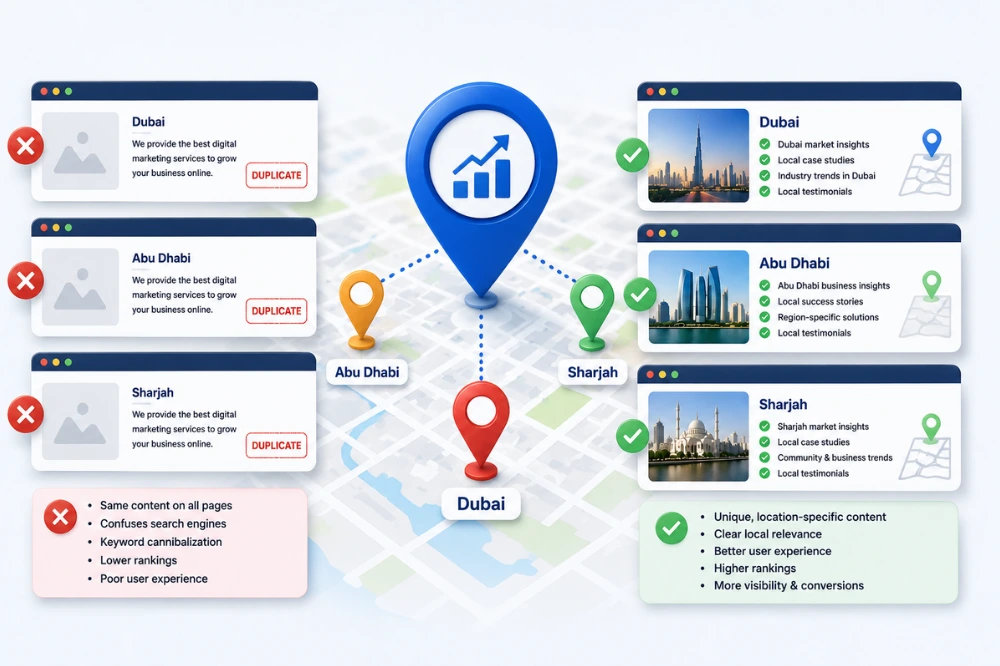
Many businesses make the mistake of using identical location pages with minor keyword changes. For example, you could have three separate pages/descriptions for Dubai, Abu Dhabi & Sharjah while maintaining the same descriptions, headings & images (with just the city name being changed). As a result, you will create duplicate or almost duplicate pages, which affects your site’s overall quality in Google.
If search engines can’t figure out which page to rank, they may experience keyword cannibalism, whereby there are multiple competing pages that use similar keywords. In addition, Google could also ignore some pages because they do not provide enough unique value for users. Additionally, duplicate content reduces user experience, because users won’t find location specific information for their local area.
Why Localized Content Matters More Than Ever
In utilizing Google’s algorithms today, it is now much more focused on user intent as well as local relevance. Therefore, when developing content, businesses should create valuable information for their audience in their geographic region versus developing content simply by targeting keywords. Each geographic market has unique behavioral patterns, customer preferences, current and emerging trends, competitive factors, etc. Companies that understand how to leverage the regions they target will outperform their competitors in local rankings.
As an example: There are many competitive businesses in Dubai (due to its reputation globally), while Abu Dhabi’s primary industries are typically considered to be government and/or large business-focused. Sharjah has an up-and-coming start-up community and businesses that support educational needs. Therefore, creating a location-based page featuring both the unique characteristics of that particular region while being widely useful will lead to an increase in user engagement and, ultimately, search engine optimization for the targeted location.
Conducting a Proper Location Page Audit
Before optimizing or creating location pages, businesses should conduct a complete get location page audit. A location page audit helps identify duplicate content issues, weak local signals, missing metadata, poor internal linking, and thin content. During the audit process, businesses should carefully review URL structures, title tags, content quality, Google Business integrations, and local keyword targeting.
Every location page should feel unique and useful rather than appearing as a copied template. A detailed audit also helps identify whether pages are optimized for user experience, mobile performance, and search intent. Businesses should review whether each page has unique headings, service descriptions, metadata, visuals, and FAQs. Even small improvements in local relevance can significantly impact rankings over time.
Creating a Strong Location Page Content Strategy
Developing an effective location page content strategy is essential for businesses targeting multiple cities. Instead of duplicating content, businesses should focus on creating localized experiences for users in each region. Every page should contain original introductions, location-specific service details, regional insights, and city-focused examples.
Businesses should explain how their services solve problems faced by customers in that particular location. Instead of using generic language, they should reference local industries, business trends, and customer expectations. This makes the content feel more authentic and useful to visitors while improving SEO relevance.
A strong content strategy also includes unique FAQs, testimonials, local references, and supporting resources. These elements help diversify content naturally and reduce the risk of duplication. Businesses that create thoughtful and location-focused content often see stronger engagement, longer session durations, and higher conversion rates.
Avoiding Duplicate Content with Smart SEO Practices
Avoiding duplicate content does not mean businesses need to reinvent every page completely. The goal is to provide meaningful differences between location pages while maintaining consistent branding. One of the best ways to achieve this is by adding local context and unique information to every page.
Businesses should avoid copying entire paragraphs across multiple city pages. Instead, they can discuss region-specific customer behavior, local competition, or service demand. Including local business examples, city-focused case studies, and regional trends can also improve uniqueness. Search engines reward websites that provide fresh and valuable information tailored to specific audiences.
Using related keyword variations instead of repeating the same phrase excessively also helps. For example, instead of repeatedly using seo experts in dubai, businesses can naturally include terms like local SEO consultants, Dubai SEO specialists, or UAE digital marketing professionals. This improves readability and prevents keyword stuffing.
Building Supporting Local Content
One of the most effective strategies for improving multi-location SEO is creating supporting local content around the main service pages. Instead of relying only on location pages, businesses should publish blogs, guides, and articles targeting local topics and search trends.
For example, businesses can create content around:
- local SEO trends in Dubai
- Google Maps optimization for UAE businesses
- social media marketing strategies for Abu Dhabi companies
- digital marketing challenges in Sharjah
This approach strengthens topical authority and gives search engines more context about the business’s expertise in different regions. It also creates more opportunities for internal linking and long-tail keyword targeting.
Importance of Google Maps Ranking Strategy
A strong Google Maps ranking strategy plays a major role in local SEO success. Many users searching for local services interact with Google Maps results before traditional organic listings. Businesses that optimize their Google Business Profiles effectively often gain more visibility, calls, website visits, and customer inquiries.
To improve Google Maps rankings, businesses should maintain consistent NAP details across all platforms. Name, address, and phone number information must remain identical on the website, directories, and social media profiles. Inconsistent business details can reduce trust signals and negatively impact local rankings.
Businesses should also add authentic business photos, collect location-specific reviews, and regularly publish updates through Google Posts. Customer reviews mentioning services and city names can significantly improve local relevance and credibility.
Using Internal Linking to Strengthen Location Pages
Internal linking helps search engines understand relationships between pages and improves website structure. Businesses targeting multiple locations should strategically connect service pages, location pages, blogs, and supporting content.
For example, a Dubai SEO service page can link to blogs about local search optimization, social media marketing trends, or Google Maps strategies. These internal links help distribute authority across the website while improving crawlability and user navigation.
A strong internal linking structure also encourages users to explore more pages, increasing engagement and session duration. This can positively impact SEO performance over time.
Why Unique Visual Content Matters
Visual content plays a surprisingly important role in local SEO. Many businesses make the mistake of using the same stock images across all location pages, which reduces uniqueness and authenticity. Search engines increasingly evaluate user engagement signals, and original visuals often help improve interaction rates.
Businesses should include:
- office images
- local team photos
- city landmarks
- regional project examples
- event participation visuals
Unique visuals make pages feel more personalized and trustworthy while helping users connect with the brand more effectively.
Common Mistakes Businesses Should Avoid
Many businesses unknowingly damage their SEO performance by creating auto-generated location pages filled with repetitive content. Thin pages, keyword stuffing, excessive city mentions, and copied service descriptions are all common issues that reduce search visibility.
Another mistake is ignoring user intent. Businesses often focus too heavily on ranking for keywords instead of creating genuinely useful pages, , which is one of the most common SEO myths. Google rewards websites that prioritize user experience, valuable information, and local relevance.
Neglecting Google Business optimization, failing to build local backlinks, and ignoring mobile performance are also major mistakes that can limit multi-location SEO success.
Conclusion
In order to effectively rank for a number of different areas, you will need to adopt a targeted, customer-centric SEO model. You can no longer use duplicate sites that have a city’s name swapped out and hope to get ranked at the local level. You need to develop quality, local content, technical and on-page SEO and Google Business Profiles and regionally focused relevance in order to compete effectively for local search engine optimization.
Through creating a well developed strategic location page content plan, frequent auditing of your location pages, improving Google Maps visibility and continually steering clear of duplicate content, you can establish long-term success in local search throughout the UAE.
Using an experienced SEO company in Dubai can help you establish scalable SEO campaigns that improve rankings whilst maintaining content quality. Partnering with a reputable social media company in Dubai can also improve brand visibility, engagement and overall online growth. By dynamically linking your SEO, local content and social media, you can build a strong foundation across many areas while offering true value to customers and search engines alike.
As local SEO continues to mature, trust signals that influence rankings and customer decisions need continued attention by companies.
Customer reviews continue to be one of the most important components when determining local visibility in today’s world, particularly as it applies to companies competing for business on Google Maps and in regional search results.