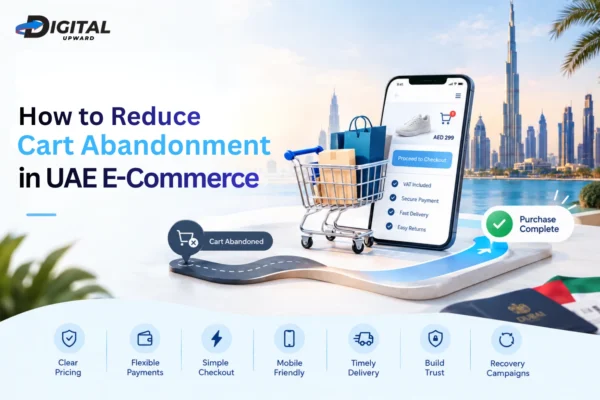
A shopper adds something to their cart. That’s a real signal of intent to buy. Then, somewhere between the cart and the final click, they vanish. This is cart abandonment, and it’s one of the most persistent problems UAE e-commerce brands deal with. The average documented abandonment rate globally sits close to 70%. Most of the people who show up ready to buy never actually finish the purchase. The good news: a lot of that lost revenue comes back once checkout gets simpler.
Why Cart Abandonment Is High Among UAE E-commerce Consumers
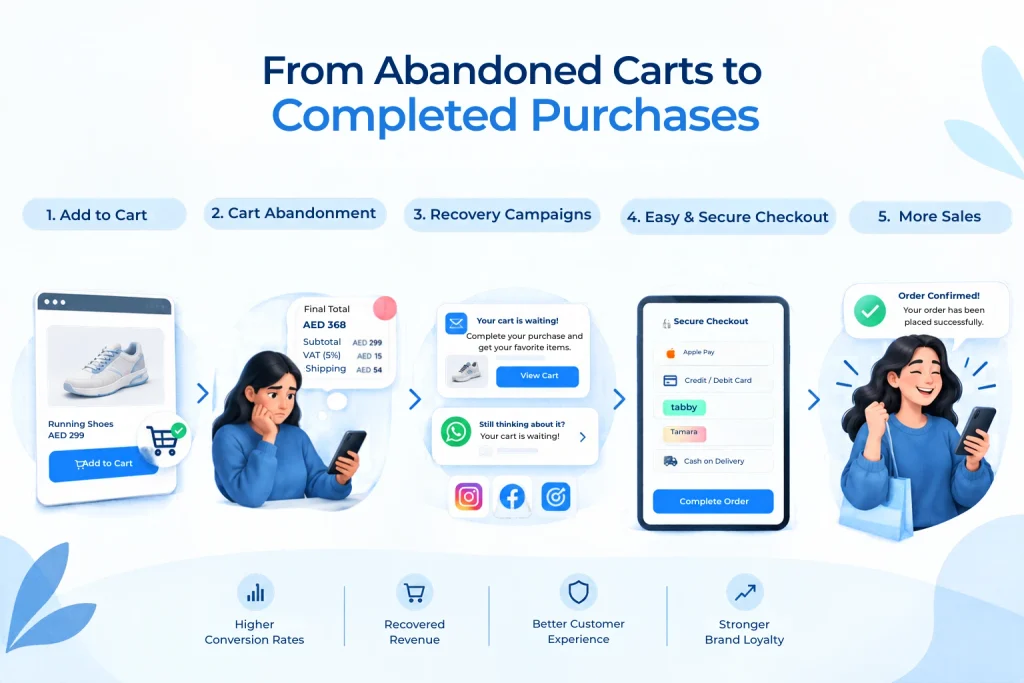
Unexpected costs are usually the first culprit. A customer adds an item expecting one price, then hits checkout and finds VAT, shipping, or other fees stacked on top. That gap between the expected and actual total is often enough to make someone close the tab.
Payment choice matters just as much. UAE shoppers increasingly reach for Apple Pay, one-click checkout, BNPL services like Tabby and Tamara, or cash on delivery. If a store only accepts cards, some of these shoppers simply won’t complete the order, not because they weren’t interested, but because the store didn’t meet them where they already pay.
Then there’s friction in the process itself: long registration forms, forced account creation, and error messages that don’t explain what went wrong. Each one is a small excuse to give up.
Seven Methods to Prevent Cart Abandonment at UAE E-commerce Stores
1. Show the Total Price Early
Display VAT, shipping, and any other charges as early in the journey as possible, ideally before checkout even starts. The UAE’s VAT rate is 5%, and prices should clearly state whether that’s included or not.
2. Offer the Payment Methods UAE Shoppers Actually Use
Cards are no longer enough on their own. Add Apple Pay and other wallets, BNPL through Tabby or Tamara, and cash on delivery where it fits your logistics. Speed matters here too, the fewer taps between “buy” and “paid,” the better.
3. Keep Checkout Simple
Guest checkout should be the default, not an afterthought. Cut every form field that isn’t essential, and use autofill, saved details, and a visible progress bar so customers know exactly how much is left. When you do need information from them, say why you need it, a labeled field is far less annoying than a mysterious one.
4. Optimize for Mobile
Most UAE e-commerce traffic comes through phones, so test your checkout there first, not last. Buttons need real tap targets, text needs to be legible without zooming, and error messages need to say exactly what to fix. Page speed matters too: a slow-loading payment step is often where mobile shoppers give up entirely.
5. Be Upfront About Delivery
Tell shoppers when their order will arrive and what the return process looks like before they pay, not after. Uncertainty about delivery timing is a quiet but common reason carts get abandoned at the last step.
6. Build Trust at the Point of Payment
HTTPS, a recognizable payment gateway, and visible refund and privacy policies all signal that a transaction is safe. Consistent branding throughout the checkout flow also reassures shoppers they haven’t been redirected somewhere unfamiliar.
7. Bring Back the Shoppers Who Leave
Abandoned cart emails and WhatsApp reminders (sent only with consent) can recover a meaningful share of lost sales. These messages work best when they simply remind the shopper what they left behind and link straight back to it, not every message needs a discount attached. Sometimes answering a delivery question or offering support does more than a percentage off.
Finding Where Shoppers Drop Off
Tools like GA4 and Meta Pixel let you track each stage Add to Cart, Start Checkout, Payment, Purchase- broken down by device, traffic source, and product category. A sharp drop-off at the shipping step, for instance, usually points to one of two things: the shipping cost is a surprise, or the delivery options aren’t clear enough. This is exactly the kind of diagnostic work a digital marketing agency in Dubai is set up to handle, since it requires both the tracking setup and the pattern recognition to know what a given drop-off actually means.
Fewer Abandoned Carts, More Sales
None of this is really about discounting harder. It’s about removing the small frictions that make someone hesitate: surprise costs, missing payment options, forms that ask for too much, unclear delivery timing. Fix those, and more of the people who already wanted to buy will actually finish the job.
Recovery campaigns are the safety net for the ones who still leave. But the real gains come from tracking where people drop off in the first place and treating that as an ongoing process, not a one-time fix.
How Digital Upward Can Help
Digital Upward works with UAE e-commerce brands to close this exact gap, turning shoppers who show intent into shoppers who actually check out. That means:
- Auditing your funnel to find precisely where people drop off
- Setting up GA4 and Meta Pixel tracking on cart and checkout events
- Running consent-based recovery campaigns across email, WhatsApp, and social media, including retargeting through a social media marketing agency in Dubai when paid remarketing is the right lever
Want to know where you’re losing sales? Book a free checkout audit
FAQs
What’s a good cart abandonment rate for a UAE-based online shop?
There’s no official UAE benchmark. Global averages hover near 70%, which is a reasonable starting reference, but compare yourself against your own numbers by device, traffic source, and product category rather than chasing an industry-wide figure.
What should an abandoned cart message include?
The product, a direct link back to the cart, delivery information, and a way to reach support. A discount is optional, not required.
Why does showing delivery costs late cause abandonment?
Because it changes the deal the shopper thought they were getting. Showing the real total early avoids that letdown at the last step.
Is WhatsApp worth using for cart recovery?
Yes, provided the customer opted in. Keep it to occasional, short messages, frequent WhatsApp pings tend to backfire.
Should I require account creation to check out?
No. Guest checkout removes a real barrier; account creation can happen after the purchase if you still want it.
How do I find exactly where shoppers abandon checkout?
Track each stage – cart, checkout, shipping, payment, purchase – as separate events, then compare drop-off rates by device and traffic source.
Does a poor mobile checkout make abandonment worse?
Yes. Small tap targets, slow load times, and confusing navigation all compound on mobile more than desktop.
Does cash on delivery help reduce abandonment in the UAE?
Often, yes it removes hesitation about paying online upfront. The trade-off is higher failed-delivery and return rates, which is why many stores offer COD alongside BNPL and digital wallets rather than as the only option.
Can I recover abandoned carts automatically on Shopify or WooCommerce?
Yes. Both platforms support native or plugin-based abandoned cart emails. Layer WhatsApp or social retargeting on top for customers who’ve opted into those channels.